Best Ceramic Food Storage Container Supplier in China?
Choosing the best Ceramic Food Storage Container supplier in China takes more than comparing prices. Buyers need to examine product quality, manufacturing consistency, communication, and the supplier’s ability to meet specific requirements. A polished sample can look impressive, but production batches may reveal differences in glaze, dimensions, or lid fit. Details matter.
Ceramic containers should be assessed for practical use, not appearance alone. Check the container’s weight, wall thickness, finish, and how securely its lid closes. Ask for clear product specifications, sample options, packaging details, and information about quality checks. Where food-contact suitability is important, request relevant documentation and verify that it matches the exact product being purchased. Do not rely on broad claims without supporting records.
A capable supplier should answer questions directly and explain what can, and cannot, be customized. Confirm minimum order quantities, lead times, sample costs, and how defects or delays are handled. These points help set realistic expectations before a larger order. Still, no supplier is perfect. Even a careful review cannot remove every risk, and a sample may not represent every unit in a shipment.
This guide explores how to compare Chinese suppliers with a practical, evidence-based approach. It considers product design, quality control, communication, and ordering terms. The goal is not to find the cheapest offer at any cost, but a partner whose products and processes suit your needs. A little caution now can prevent avoidable surprises later.
Define Ceramic Food Storage Ware by Body Type, Glaze, and Food-Contact Use
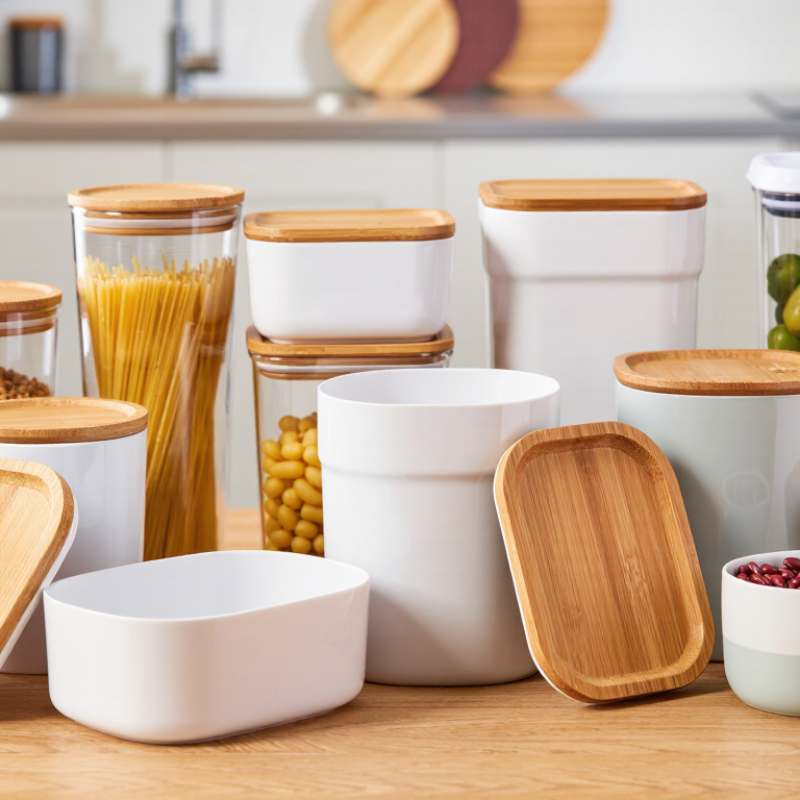
Ceramic food storage ware should be defined by its body, glaze, and intended food-contact use, not appearance alone. Stoneware, porcelain, and earthenware differ in composition and firing, so water absorption can vary between products. ASTM C373 provides a method for measuring ceramic water absorption and porosity. Ask a supplier for test results from the actual body and finished product. Details matter. Glaze color is not proof of performance; request documented checks for surface defects, durability, and lead or cadmium migration where relevant to your sales market. A test report for another recipe may not apply.
The UNEP Food Waste Index Report 2024 estimates that 1.05 billion tonnes of food were wasted worldwide in 2022, with households responsible for about 60 percent. A container cannot prevent waste by itself, but a close-fitting lid and a suitable interior surface can make stored leftovers easier to manage. Check whether the lid seal is food-contact suitable, and whether the container is intended for refrigerator, microwave, or dishwasher use. These details should appear in product specifications, not just sales copy. I still find this easy to overlook: a beautiful glaze tells you little about the body beneath it.
Best Ceramic Food Storage Container Supplier in China? Define Ceramic Food Storage Ware by Body Type, Glaze, and Food-Contact Use
ASTM C373 water-absorption classifications use boundaries of 0.5%, 3%, and 7%. These values help describe ceramic bodies; they do not, on their own, establish that a finished container is suitable for food contact. Suitability also depends on the glaze, intended use, and applicable food-contact testing.
Trace China’s Production Process from Forming to High-Temperature Firing
Best Ceramic Food Storage Container Supplier in China?
A dependable supplier should show how clay becomes a finished container. Production starts with body preparation: raw materials are measured, mixed, and refined to reduce uneven particles. The prepared clay is then pressed or slip-cast into shapes. Workers check rims, lids, and corners before drying, since small cracks can appear as moisture escapes. No line is perfect. Ask how defects are recorded and whether samples are checked after each stage.
Firing deserves close attention. The European Commission’s 2007 Ceramic Manufacturing Industry BREF describes firing as an energy-intensive operation and reports temperatures reaching about 1,300°C for some ceramic processes. That figure covers different ceramic products, not every food container. A supplier should therefore provide the actual firing range for the body and glaze, plus kiln records where available.
Consistent heating matters: underfiring may weaken the body, while uneven cooling can leave warping or hairline cracks. Request finished samples and inspect their fit, glaze coverage, and base before approving an order.
Tip: Ask for a process flow, firing-temperature records, and batch inspection criteria. Check several lids yourself; one sample can hide variation.
Check GB 4806.4-2016 Compliance and Lead/Cadmium Migration Test Results
Choosing the best ceramic food storage supplier in China starts with evidence, not a glossy glaze. Ask for a current GB 4806.4-2016 test report covering lead and cadmium migration. The standard sets limits by ceramic article category, so a result for a flat plate may not represent a lidded storage jar. Small detail. Big difference.
Check that the report names the tested product, glaze, sample date, test method, units, and measured results. Confirm the laboratory is accredited to ISO/IEC 17025 for the relevant method. Then match the report’s sample to the production item: a changed glaze color, supplier, or firing process deserves fresh testing. I would also ask whether the test sample came from routine production or was specially prepared. That question can feel awkward, but it matters.
The WHO’s 2024 lead fact sheet estimates that lead exposure contributed to 1.5 million deaths worldwide in 2021. This figure covers exposure from all sources, not ceramic containers alone. It does show why migration data should be specific and traceable. Compare the reported lead and cadmium values with the applicable limits for the exact container type, and request the full laboratory report rather than a cropped certificate. A neat PDF is not the same as a verified batch.
Compare Supplier Quality Controls Using ISO 2859-1 Sampling Plans
For a ceramic food storage container supplier in China, a good-looking sample is only a starting point. Ask how production lots are inspected using ISO 2859-1, which sets sampling plans for inspection by attributes. The plan should identify the lot size, inspection level, AQL, and acceptance and rejection numbers. AQL is a decision reference, not a promise that every unit will meet a particular defect percentage. That distinction matters.
For a real lot, inspectors might check rim chips, glaze pinholes, uneven color, container dimensions, and lid fit. Agree on defect categories before production: a sharp chip on a food-contact rim is not the same as a small cosmetic mark underneath. The chosen sample size and pass/fail limits should be recorded on the inspection report, alongside the lot identification and photographs. Keep the criteria specific. “Good finish” is not specific.
Sampling cannot reveal every hidden flaw. It also does not replace separate testing for food-contact suitability or performance under intended use. I would ask the supplier to explain what happens after a failed inspection, including whether the lot is sorted and reinspected. One caution: a plan can look precise while using poorly defined defect standards. That is easy to miss, and worth reviewing before shipment.
Verify Export Requirements Under FDA 21 CFR 175.300 and EU Directive 84/500/EEC
When choosing a ceramic food storage container supplier in China, check which parts contact food. FDA 21 CFR 175.300 applies to certain resinous and polymeric coatings, not ceramic ware generally. If a container has a coated surface, ask whether that coating and its intended conditions of use meet the regulation. A glaze needs separate consideration. Do not treat a generic “FDA compliant” statement as proof for every product.
For EU shipments, Directive 84/500/EEC, as amended, addresses lead and cadmium migration from ceramic articles intended to contact food. Request test reports for the finished container, including its glaze, and confirm that the tested model matches your order. Check the report’s laboratory, test date, sample description, and intended use. Hot, acidic foods and long storage can affect what testing is relevant. Paperwork can look complete, yet describe a different shape or finish. That gap deserves a closer look.
Tips: Ask for the EU declaration of compliance and applicable migration test results. For FDA requirements, verify each food-contact material against its specific use; 175.300 may apply to a coating, not the ceramic body. Keep copies of reports, product specifications, and written answers. Details matter. A supplier’s clear response is useful, but independent review may still be needed.