65337edc2x

Leave Your Message

China Top 10 Porcelain Tea Set Manufacturers

China’s porcelain tea set industry combines centuries of ceramic practice with modern kiln technology, export experience, and careful quality control. This guide examines China Top 10 Porcelain Tea Set Manufacturers through a practical buyer’s lens. It focuses on design capability, clay and glaze consistency, firing standards, customization, packaging, and communication.

Porcelain Tea Sets may look simple, yet small differences matter. A smooth rim improves drinking comfort. Even glazing creates a cleaner appearance. Well-fitted lids help reduce spills during service. Strong handles, stable foot rings, and accurate capacity measurements also affect daily use. The manufacturers discussed here serve different needs, including hotel tableware, restaurant collections, private-label gifts, and refined household sets.

This selection should not be treated as an absolute ranking. Supplier strengths can change with equipment, management, order volume, and production schedules. Samples remain essential. Buyers should request test pieces, food-contact documentation, packing photos, and clear production terms before deciding. Factory visits or independent inspections can add confidence, especially for large orders. Some claims may require further verification. That is worth acknowledging.

The guide also considers how each manufacturer communicates technical details, handles revisions, and responds when a sample fails. Reliable sourcing depends on more than attractive photographs. It requires traceable information, realistic lead times, and a willingness to discuss weaknesses. By comparing these practical signals, readers can identify suitable partners instead of choosing the most impressive catalog.

China Top 10 Porcelain Tea Set Manufacturers

Definition and Role of Porcelain Tea Set Manufacturers in China

China Top 10 Porcelain Tea Set Manufacturers

Porcelain tea set manufacturers in China design, form, fire, inspect, and export ceramic vessels. Their work connects clay science with daily tea rituals. A typical set may include a teapot, cups, saucers, and a serving tray. Manufacturers also manage glaze selection, firing temperature, food-contact safety, packaging, and overseas logistics.

Their role extends beyond production. They translate buyer requirements into drawings, molds, sample pieces, and repeatable specifications. According to UN Comtrade data for 2023, China’s exports under HS 6911 exceeded US$2 billion. This category includes porcelain tableware beyond tea sets, so the figure is not a perfect tea-set measure. That limitation matters. The International Trade Centre also uses HS 6911 to track porcelain tableware trade, helping buyers compare export performance across markets.

Experienced manufacturers usually control several checkpoints. Workers inspect glaze pinholes under bright light. Technicians measure cup capacity and rim thickness. Quality teams test stacking strength, color consistency, and packing resistance. Relevant Chinese standards, including GB 4806 requirements for food-contact ceramics, support safer material and glaze decisions. However, compliance papers alone cannot prove every shipment’s quality.

The manufacturing model is efficient, but not flawless. Small glaze differences may appear between production batches. Buyers should request recent samples, test reports, factory audit records, and clear tolerance ranges. A reliable supplier explains these weaknesses instead of promising impossible perfection.

Key Criteria for Evaluating China’s Top Porcelain Tea Set Manufacturers

Evaluating China’s top porcelain tea set manufacturers requires more than comparing photographs. Examine porcelain composition, kaolin content, firing temperature, and water absorption. A reliable factory should explain these details clearly. Ask for recent laboratory reports covering food-contact safety, glaze durability, and heavy-metal migration. Request matching samples from the same production line, not only showroom pieces. Small differences in rim thickness, lid fit, and handle balance often reveal process control.

Tips: Check the factory’s production records, kiln maintenance, quality checkpoints, and export packaging. Visit the facility when possible, or arrange a third-party audit. Confirm minimum order quantities, sample fees, replacement policies, and realistic lead times. Clear written specifications reduce costly misunderstandings. I have found that a beautiful sample can hide inconsistent mass production. That risk deserves attention.

Assess craftsmanship through practical testing. Fill each cup with hot water and inspect for warping, pinholes, uneven glaze, or uncomfortable heat transfer. Review the manufacturer’s experience with similar shapes and decoration methods. Ask how rejected pieces are recorded and corrected. A dependable supplier welcomes technical questions and provides traceable batch information. However, even experienced manufacturers may miss minor defects during busy seasons. Independent inspection before shipment remains a sensible safeguard.

This chart presents a suggested evaluation framework for comparing porcelain tea set manufacturers. The weighting emphasizes product quality, food safety, and production reliability rather than company size or brand recognition. It is a procurement reference model, not a ranking of individual manufacturers.

Leading Manufacturing Regions and Their Production Characteristics

China Top 10 Porcelain Tea Set Manufacturers

China’s porcelain tea set industry is concentrated in several regions, each with distinct production strengths. Jingdezhen is known for refined kaolin clay, thin walls, smooth glazing, and detailed hand painting. Its craftsmen often produce elegant cups with clear, bright surfaces and balanced shapes.

Dehua focuses on white porcelain with a soft, warm appearance. Manufacturers there commonly create simple tea sets, sculptural pieces, and durable hotel-grade items. Chaozhou is recognized for practical ceramic production, especially lightweight sets with traditional forms and efficient firing processes. In Tangshan, factories often combine modern equipment with stable mass production. This supports consistent sizes, glaze colors, and packaging standards.

Regional differences matter during supplier evaluation. A handmade set may show slight changes in brush lines or cup thickness. That is not always a defect, but it can affect large orders. Factory visits, sample testing, and glaze inspection provide more reliable evidence than catalog photos. I have found that buyers sometimes underestimate packing quality. A beautiful teapot is still unsuitable if its lid shifts during transport.

Tips: Request samples from at least two regions. Check water absorption, lid fit, handle strength, and color consistency. Ask for firing temperatures and quality-control records. Also confirm whether the factory can repeat the same design after several production cycles. Small differences may become obvious on a restaurant table.

Materials, Craftsmanship, Designs, and Customization Services

China’s top 10 porcelain tea set manufacturers differ mainly in materials, craftsmanship, design, and customization. High-grade kaolin supports a whiter body and sharper details. Feldspar and quartz improve strength after firing. Many experienced factories fire porcelain above 1,200°C, but temperature alone does not prove quality.

Craftsmanship shows in glaze consistency, rim smoothness, handle balance, and foot-ring finishing. A practical inspection should include dishwasher testing, thermal-shock checks, and repeated washing. The IMARC Group valued the global tableware market at about US$42.5 billion in 2023, showing strong demand for reliable production. However, market growth does not guarantee every supplier’s capability. Some factories still rely on manual inspection, which can create uneven results. That is not always a defect, but buyers should define acceptable limits.

Design customization may include decal printing, hand painting, embossed textures, gift boxes, and shape development. Custom molds usually require sampling, engineering review, and minimum order quantities. Tips: Request material certificates, firing records, food-contact test reports, and pre-production samples. Compare the sample with mass-production pieces. Small color differences can become obvious under restaurant lighting. Customization sounds simple. It rarely is. A clear Pantone reference, approved artwork, and signed tolerance sheet can prevent costly misunderstandings. Conformity with applicable food-contact standards should be verified through independent laboratory documentation, not verbal promises.

China Top 10 Porcelain Tea Set Manufacturers - Materials, Craftsmanship, Designs, and Customization Services

The following table presents ten representative Chinese porcelain tea-set manufacturing profiles. The specifications are industry-reference ranges commonly used for commercial production and sourcing; exact capabilities, minimum order quantities, and lead times vary by factory, product complexity, and order volume.

Rank Manufacturer Profile Primary Porcelain Materials Typical Craftsmanship Firing and Quality Features Common Design Styles Customization Services Typical MOQ Typical Bulk Lead Time
1 Profile 01
Premium hotel and hospitality supplier
Hard-paste porcelain Bone china options High-whiteness, vitrified bodies suitable for frequent commercial use. Pressure casting, slip casting, precision trimming, and smooth glazed finishing. Reinforced rims and foot rings are commonly available. High-temperature firing, generally above 1,200°C for vitrified porcelain. Production inspection commonly covers warping, pinholes, glaze defects, and dimensional consistency. Minimalist white sets, stackable hotel shapes, contemporary coupe forms, and classic round teacups. Custom shapes, decal printing, underglaze decoration, gold or platinum trim, gift packaging, barcode labels, and hospitality-specific packing. 500–2,000 sets per design 35–60 days after sample approval
2 Profile 02
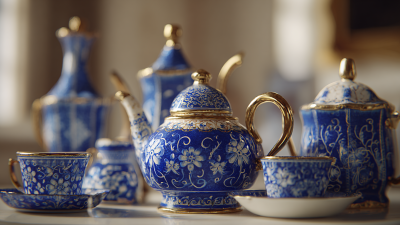
Traditional blue-and-white specialist
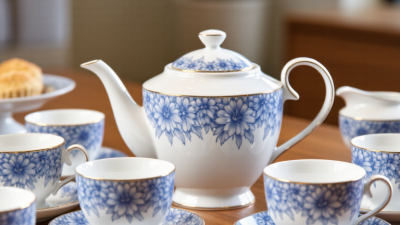
Feldspathic porcelain Fine porcelain clay Smooth white bodies designed to provide contrast for cobalt decoration. Hand-painted or transfer-applied cobalt motifs, glazing, kiln firing, and selective hand-finishing. Pattern registration is checked during decoration inspection. High-temperature glaze firing supports a dense body and low water absorption. Common checks include color consistency, crack detection, and glaze coverage. Blue-and-white florals, geometric borders, Chinese-inspired landscapes, bamboo motifs, and modern simplified patterns. Custom artwork, repeat-pattern development, logo placement, color matching, presentation boxes, and coordinated teapot-and-cup collections. 300–1,000 sets per pattern 30–55 days after artwork confirmation
3 Profile 03
Bone china and fine-dining supplier
Bone china Fine porcelain Lightweight, translucent bodies with a refined surface and high whiteness. Fine-wall forming, precision glazing, transfer decoration, and hand-applied metallic accents. Shapes are optimized for elegant presentation and comfortable handling. Controlled firing schedules are used to balance translucency, strength, and glaze quality. Inspection often includes light-transmission, rim alignment, and surface finish checks. European-style tea services, slender cups, raised saucers, embossed details, and formal afternoon-tea designs. Custom mold development, embossed logos, metallic edging, custom colorways, coordinated cutlery packaging, and private-label cartons without displaying brand data in the specification. 300–800 sets per design 40–65 days after mold or sample approval
4 Profile 04
Hand-painted artisan workshop
Soft-paste porcelain Hard-paste porcelain Body selection depends on the required surface texture, translucency, and decoration method. Hand painting, brush detailing, hand gilding, relief application, and individual finishing. Small variations may occur because of the handmade process. Bisque firing followed by glaze and decoration firing is common. Quality review focuses on artistic consistency, adhesion, surface cleanliness, and safe finishing. Botanical illustrations, birds and flowers, vintage tea sets, pastoral scenes, and individually numbered decorative collections. Custom illustrations, artist sample development, personalized color palettes, limited editions, handwritten-style decoration, and premium gift presentation. 100–500 sets per design 45–90 days depending on handwork
5 Profile 05
Modern lifestyle and retail supplier
Vitrified porcelain Stoneware options Durable bodies designed for daily use, microwave compatibility, and dishwasher use where the decoration permits. Automated forming, pressure casting, screen printing, reactive or satin glazing, and standardized finishing for consistent retail production. Controlled high-temperature firing provides a dense body and resistance to everyday wear. Testing may include thermal shock, glaze adhesion, and dishwasher durability. Scandinavian-inspired forms, matte colors, stackable sets, organic silhouettes, and compact two- or four-piece tea collections. Custom color development, packaging design, printed inserts, retail-ready barcodes, shape adjustments, and coordinated mug or accessory ranges. 1,000–3,000 sets per design 30–50 days for standard forms
6 Profile 06
OEM and private-label exporter
Porcelain Bone china Multiple body options are offered to match price, weight, whiteness, and durability requirements. Mold-based production, transfer printing, decals, spray glazing, and assembly-line inspection. Suitable for standardized international orders. Firing parameters are matched to the selected body and glaze system. Export-oriented checks may include carton drop testing, quantity verification, and packaging inspection. Classic white, seasonal prints, promotional tea sets, corporate gift styles, and market-specific shapes. OEM mold production, logo decals, custom color matching, instruction cards, export cartons, assortment planning, and sample courier coordination. 500–2,000 sets per SKU 35–60 days after final approval
7 Profile 07
Ceremonial and gongfu tea-set producer
Fine porcelain Thin-wall porcelain Lightweight bodies are selected for visual clarity, heat handling, and detailed decoration. Fine forming, lid-and-spout fitting, hand inspection, underglaze painting, and multi-piece set assembly. Functional balance is important for teapots and cups. High-temperature firing helps produce low-porosity ware. Checks commonly include lid fit, spout flow, handle strength, cup stability, and glaze uniformity. Gongfu tea sets, small tasting cups, lidded bowls, fairness pitchers, bamboo-inspired forms, and contemporary Chinese motifs. Custom teapot profiles, engraved or painted patterns, coordinated tray designs, presentation boxes, tea ceremony accessories, and set-combination planning. 300–1,000 sets per collection 35–70 days depending on components
8 Profile 08
Embossed and textured porcelain supplier
High-fired porcelain Fine-grain ceramic body Smooth or lightly textured bodies suitable for relief and tactile surface effects. Pressed relief, molded textures, embossed borders, matte or glossy glazing, and selective hand polishing of raised details. Firing is controlled to preserve relief definition and prevent deformation. Inspection focuses on texture sharpness, glaze pooling, edge integrity, and flatness. Lace-inspired relief, geometric textures, leaf patterns, raised dots, sculptural handles, and contemporary giftware designs. Custom embossing, proprietary mold creation, textured handles, mixed glaze effects, logo relief, and coordinated packaging inserts. 500–1,500 sets per design 40–75 days including mold preparation
9 Profile 09
Sustainable packaging and export-focused supplier
Vitrified porcelain Recycled-content packaging options Durable ceramic bodies paired with paper-based, molded-pulp, or reduced-plastic packaging solutions. Standardized forming, lead-free glaze systems where specified, water-based or low-impact packaging materials, and batch-based quality control. High-temperature firing supports low absorption and long service life. Common inspections include glaze safety documentation, thermal resistance, and packaging protection. Neutral colors, natural textures, simple silhouettes, reusable gift boxes, and compact shipping-friendly tea-set formats. FSC-certified paper packaging when available, recycled board cartons, custom inserts, low-plastic packing, color customization, and sustainability documentation support. 1,000–3,000 sets per design 40–70 days depending on packaging requirements
10 Profile 10
Small-batch boutique and gift-set producer
Porcelain Fine china options Flexible body selection for boutique collections, promotional gifts, and limited seasonal releases. Small-batch casting, hand finishing, decal application, painted accents, and manual set assembly. Appropriate for distinctive designs and moderate volumes. Multi-stage firing may be used for decorated pieces. Quality checks generally cover color, shape, glaze coverage, decoration adhesion, and gift-box presentation. Floral gift sets, travel-inspired designs, novelty teapots, seasonal collections, single-cup sets, and coordinated tea accessories. Small-volume custom artwork, personalized names or messages, custom gift boxes, mixed-set combinations, seasonal colorways, and sample-based development. 100–500 sets per design 45–80 days depending on customization

How to Select a Reliable Chinese Porcelain Tea Set Manufacturer

Selecting a reliable Chinese porcelain tea set manufacturer requires more than comparing catalog photos. Examine production evidence, material controls, and communication habits.

Request a factory video or arrange an independent audit. Check whether porcelain bodies are mixed consistently and fired at stable temperatures. Ask for samples from different batches, not one carefully selected set. Look closely. Inspect rims, handles, glaze coverage, lid fit, and painted details under bright light. Small pinholes may indicate weak quality control. Slight color variation can also reveal inconsistent firing.

A professional supplier should provide clear specifications for clay composition, dimensions, packaging, and acceptable defect limits. Ask for recent test reports covering food-contact safety, including lead and cadmium migration. Confirm that the testing laboratory is properly accredited in the destination market. Do not rely on vague phrases such as “export quality.” Request a written inspection plan before mass production. It should define sampling levels, carton checks, drop testing, and corrective actions.

Communication is another practical test. Send the same technical questions to several manufacturers and compare their answers. Reliable teams explain limitations instead of promising everything. Delayed replies are not always a failure, but repeated unanswered details deserve attention. I have found that low prices can hide thicker cartons, higher breakage, or expensive rework. That assumption is not always correct, so verify it with landed-cost calculations and a small trial order. Keep records of approvals, revisions, and signed specifications. Small details matter.