Top 10 Porcelain Tea Sets for Global Buyers?
Choosing among the Top 10 Porcelain Tea Sets for Global Buyers requires more than attractive photographs. Buyers need evidence, practical testing, and honest product details.
Edmund de Waal, a renowned ceramic artist and porcelain historian, once wrote, “Porcelain is the most beautiful material in the world.” Its beauty becomes meaningful when the set performs well. A clear cup should reveal subtle translucency near a window. The glaze should feel smooth, without pinholes, rough edges, or uneven coloring. Handles must remain comfortable after several pours. Lids should sit securely, but not become difficult to remove.
This guide evaluates Porcelain Tea Sets through a buyer’s practical lens. It considers porcelain quality, firing consistency, cup capacity, teapot balance, heat retention, and cleaning requirements. It also examines packaging strength, replacement availability, supplier communication, and documented manufacturing experience. These details matter when products travel long distances and arrive in different climates.
Not every elegant set is durable. Some heavy pieces feel reassuring, yet become tiring during daily use. Some delicate designs look refined, but may require gentler handling. That is where judgment becomes imperfect. Personal taste still influences every ranking. A minimalist white set may suit a hotel, while a painted floral set may better fit a household gift market.
The selected ten sets represent different budgets, traditions, and serving habits. Readers should still verify dimensions, materials, and supplier claims before purchasing. A beautiful photograph is not enough. Small details decide satisfaction.
Porcelain Tea Sets: Definition, History, and Global Appeal
Top 10 Porcelain Tea Sets for Global Buyers?
Porcelain is a fine ceramic made from kaolin, feldspar, and quartz. It is fired at roughly 1,200–1,400°C. This process creates a dense, pale, and low-porosity body. The result feels light but remains surprisingly strong. The category is not perfectly defined. Some sellers use “porcelain” for lower-fired ceramic products, so buyers should check material specifications and firing temperatures.
Porcelain tea culture developed in China during the Tang and Song periods. Export demand later shaped European tableware design. Its global appeal now comes from both function and symbolism. A thin cup reveals tea color clearly. A glazed surface resists stains and absorbs fewer aromas. FAOSTAT records global tea production above six million tonnes annually in recent years, supporting continued demand for practical serving ware. Grand View Research’s 2024 ceramic tableware analysis estimates the wider market at about USD 10.7 billion in 2023, with steady growth expected through 2030.
A useful buying test is simple. Hold the cup by its handle, inspect the rim, and check whether the lid sits evenly. Look for consistent glaze, smooth foot rings, and protective export packaging. Microwave and dishwasher guidance also matters across different markets. In my view, weight is often misunderstood. Very thin porcelain may feel elegant, but it can be less forgiving during shipping. A slightly heavier set may offer better everyday confidence. The perfect set does not exist. Availability, cultural habits, and handling conditions still require careful reflection.
Key Materials, Craftsmanship, and Quality Standards
Top 10 Porcelain Tea Sets for Global Buyers
Porcelain quality begins with the clay body. High-grade porcelain usually contains kaolin, feldspar, and quartz. These minerals create a dense, bright, and lightly translucent material after firing. A thin cup should feel strong, not fragile. Hold it near a window. Light transmission can reveal uneven thickness or poor firing.
Craftsmanship appears in small details. Check whether the teapot lid sits evenly and turns smoothly without scraping. The handle should meet the body cleanly, with no sharp edges or visible gaps. A balanced foot ring helps the cup stand securely. Glaze should look continuous, without pinholes, crawling, or rough patches around the rim. Handmade pieces may show slight variation. That is not always a defect. Still, uneven decoration can suggest weak process control.
Global buyers should request food-contact test reports before placing large orders. Testing should address lead and cadmium migration, especially on painted or brightly glazed surfaces. Suppliers should also provide firing information, material specifications, and inspection records. Standards differ by market, so one certificate may not satisfy every destination. Ask for applicable laboratory evidence, not vague claims. Thermal-shock testing matters for sets used with boiling water. Yet many buyers overlook it. A beautiful set can still crack after repeated temperature changes. Packaging deserves equal attention, because a perfect cup has little value after transport damage.
The chart compares representative porcelain tea-set formats commonly used by global buyers. Cup capacity and set-piece counts are typical market specifications, while final purchasing decisions should also verify porcelain composition, firing quality, glaze safety, dimensional consistency, and applicable food-contact requirements.
Top Ten Porcelain Tea Set Types for International Buyers
Top 10 Porcelain Tea Sets for Global Buyers
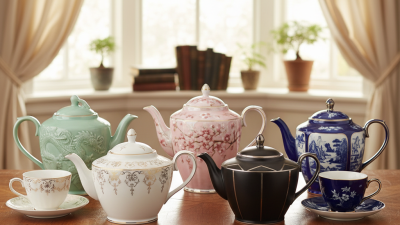
International buyers should compare tea set types by use, capacity, and shipping needs. Classic porcelain sets usually include a teapot, cups, and matching saucers. They suit hotels, gift shops, and everyday dining. Lidded gaiwan sets support loose-leaf brewing and offer a more traditional experience. European-style sets often provide larger cups, while compact stacking sets save shelf space in cafés and small kitchens. Bone china is often grouped with porcelain, but its composition and appearance differ. Buyers should check the exact material description.
For export purchasing, glaze quality matters. A smooth surface resists tea stains and feels comfortable against the lips. Even walls help reduce sudden temperature changes, although no porcelain set is completely breakproof. I once underestimated handle strength when judging a set from photographs. It looked refined, but the thin handle felt less practical during repeated service. Ask for samples before placing a large order. Request dimensions, product weight, packing details, and food-contact test documents for the destination market. Requirements can differ between countries.
Tips: Match cup capacity with local drinking habits. Check whether the set is dishwasher- and microwave-safe. Confirm carton protection with drop-test photos or sample packaging. White porcelain shows tea color clearly, while painted designs may appeal to gift buyers. Avoid choosing only by appearance. A beautiful set can still pour poorly, wobble on a saucer, or arrive damaged. Small flaws are worth discussing early.
Buying Criteria, Import Considerations, and Care Requirements
Top 10 Porcelain Tea Sets for Global Buyers
For global buyers, porcelain tea sets must balance elegance, durability, and import practicality. A practical top-ten shortlist should test glaze quality, wall thickness, handle comfort, saucer fit, packing strength, minimum order quantity, replacement options, and care instructions. Check for an even glaze, clean rims, and stable cups. Ask for food-contact test reports covering lead and cadmium release. Small details matter. I would not trust a supplier’s single photo; inspect samples under daylight and after repeated washing.
Import planning starts with the correct customs classification, commonly HS 6911 for porcelain tableware. Requirements vary by destination, so confirm labeling, packaging, product safety, and documentation with a qualified customs broker. UNCTAD’s Review of Maritime Transport reports that ships carry over 80% of global merchandise trade by volume. This makes moisture-resistant cartons, impact protection, and shipment tracking essential. The World Bank’s Logistics Performance Index 2023 also highlights differences in customs efficiency, infrastructure, and delivery reliability. Request carton dimensions, gross weight, pallet details, and an export packing specification before ordering.
Care instructions affect customer satisfaction. Handwashing is safer for hand-painted surfaces, while sudden temperature changes can crack porcelain. Avoid placing a cold cup into boiling water. Metallic decoration may not suit microwaves or dishwashers. Testing against ISO 6486 methods can strengthen technical credibility, but destination rules still control acceptance. A perfect checklist does not exist. A thin, beautiful cup may feel refined yet perform poorly in busy hospitality settings. That trade-off deserves honest review.