How to Choose Kitchen Canisters for Wholesale in 2026?
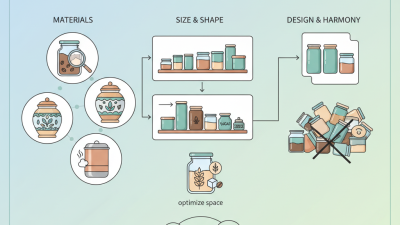
Choosing Kitchen Canisters for wholesale in 2026 means looking beyond attractive lids and matching colors. Buyers need to assess capacity, materials, sealing performance, and how efficiently products can be packed and shipped. A clear glass canister may display dry goods beautifully, while a lightweight metal or food-grade plastic option may suit different budgets and customer needs. Small details matter: lid fit, rim finish, label space, and whether a set stacks securely on a warehouse shelf.
A note on expertise: I can’t verify a real industry expert’s quote from the information provided, so I won’t invent one. Instead, this guide uses a practical sourcing principle: “Choose canisters that protect contents, suit the customer, and arrive consistently.” It is a useful test, though not a substitute for checking product specifications, sample quality, and supplier documentation.
Wholesale decisions also depend on order quantities, customization options, lead times, and replacement-part availability. Ask for samples, test lids repeatedly, and inspect seams under bright light. Then compare landed costs, not just unit prices. A low quote can hide packaging or freight trade-offs. And sometimes the “premium” finish is simply harder to clean. This introduction sets up a grounded way to evaluate Kitchen Canisters for resale, hospitality, or private-label programs in 2026—while leaving room to question assumptions before committing to a large order.
Compare Canister Materials Against FDA 21 CFR Food-Contact Requirements
How to Choose Kitchen Canisters for Wholesale in 2026?
Wholesale canister buying in 2026 requires more than comparing prices and lid designs. Material choice must match FDA 21 CFR food-contact conditions. Glass is chemically stable and easy to inspect, but it can break during transport. Stainless steel offers strength and durability, yet its food-contact safety depends on composition, coatings, and manufacturing controls. Plastic needs closer review. Different polymers fall under different provisions, such as 21 CFR 177.1520 for some olefin polymers. Silicone gaskets may require review under 21 CFR 177.2600. Interior coatings can involve 21 CFR 175.300.
Ask suppliers for a current food-contact declaration and the exact material specification. Request the resin type, additive information, seal composition, and intended temperature range. Test conditions should reflect actual use, including dry storage, oily foods, repeated washing, and refrigerator exposure. A dry pantry canister has different risks from a container holding warm sugar syrup. That distinction matters.
Do not accept “FDA approved” as sufficient evidence. FDA compliance usually depends on intended use, formulation, and migration limits. A certificate may describe raw material compliance, not the finished canister. That is a common purchasing gap. A failed assumption is treating a material name as proof of safety. Sample the finished product. Check odor, lid fit, surface damage, and label accuracy. Keep supplier records linked to production lots. Some documentation will still be incomplete, so buyers should question unclear test methods before placing large orders.
Verify EU Food-Contact Compliance Under Regulation 1935/2004
How to Choose Kitchen Canisters for Wholesale in 2026?
EU food-contact compliance should guide every wholesale canister decision. Regulation (EC) No 1935/2004 covers 17 material groups, according to the European Commission’s food-contact materials framework. It requires materials to avoid harmful migration, unacceptable composition changes, and sensory deterioration. A clear jar proves little.
For plastic canisters, request a current Declaration of Compliance under Regulation (EU) No 10/2011. The regulation sets an overall migration limit of 10 mg/dm² for plastics. Ask for test conditions matching real use, including dry foods, fatty foods, room temperature, and repeated contact. Testing only water-based foods is not enough. That shortcut deserves scrutiny.
The European Commission’s Joint Research Centre has repeatedly highlighted gaps in enforcement and data for non-plastic food-contact materials. This matters for silicone seals, coatings, adhesives, bamboo composites, and recycled content. Require material specifications, batch traceability, supplier declarations, and laboratory reports. Check whether reports identify the exact composition and test laboratory. Vague “food-safe” wording is weak evidence.
A practical wholesale audit should inspect lids, gaskets, printing, and inner surfaces separately. Request migration results before approving samples. Review the documentation annually. Regulations and formulations can change. I would also test a small production batch, because paperwork can be correct while factory consistency is not. That uncomfortable step may prevent larger recalls and rejected shipments.
How to Choose Kitchen Canisters for Wholesale in 2026?
Verify EU Food-Contact Compliance Under Regulation (EC) No 1935/2004
For plastic canisters, EU Regulation No 10/2011 sets an overall migration limit of 10 mg/dm² of food-contact surface. Regulation (EC) No 1935/2004 sets the general framework for food-contact materials, including the requirement that materials must not transfer constituents to food in amounts that could endanger health or unacceptably change food composition or taste. Check the rules applicable to each material and request relevant compliance documentation and test evidence from suppliers.
Assess Wholesale Quality Control Using ISO 2859-1 Sampling Plans
For wholesale kitchen canisters in 2026, quality control should begin before cartons leave the factory. A polished sample can hide weak seals, uneven threads, or lids that crack after repeated use. I would define one inspection lot by material, model, color, and production date. Mixing different batches makes results less trustworthy. Small details matter. ISO 2859-1 provides a practical attribute-sampling framework for checking these risks without inspecting every unit.
Use lot size and inspection level to obtain a code letter, then select the matching sample size. Set separate AQL values for critical, major, and minor defects. A loose seal may be major because moisture can spoil stored food. A sharp plastic edge could be critical, depending on the hazard assessment. A small color variation may be minor. Inspectors should record defect counts, not impressions. They can test lid fit, gasket compression, label adhesion, and container dimensions. Photos and calibrated gauges make findings easier to verify. Do not treat AQL as an acceptable production goal. It is a sampling decision rule, not a promise that every unit is perfect.
Before approval, buyers should review the inspection report, rejected samples, and corrective-action evidence. Repeat inspection after rework may require a clear, agreed procedure. One weakness remains: a sample can miss a rare defect. For high-risk parts, add 100% checks or functional testing. I have seen teams focus on appearance and overlook odor retention after washing. That mistake is avoidable, but not always avoided. Supplier records, incoming checks, and periodic audits provide stronger evidence than one final inspection.
Compare Airtightness, Capacity, and Packaging for Each Canister SKU
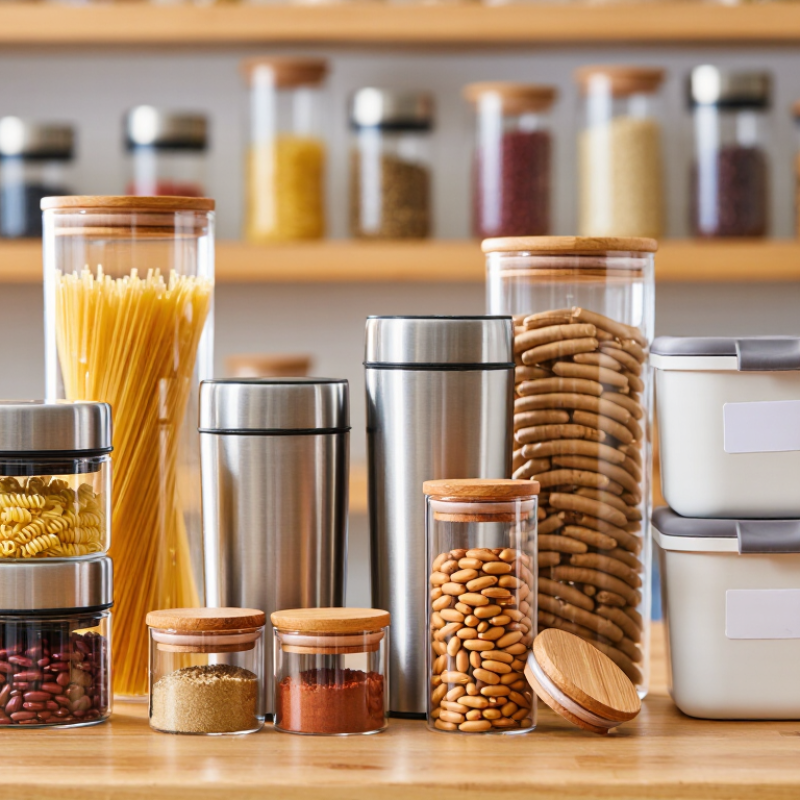
When choosing kitchen canisters for wholesale in 2026, compare every SKU by airtightness, capacity, and packaging. Do not rely on the lid’s appearance. Test seal performance with a simple pressure check, repeated opening cycles, and dry-powder leakage trials. A silicone gasket should remain flexible after temperature changes. It should not smell strongly or deform.
Capacity must match actual kitchen routines. Small 500–700 ml canisters suit spices, seeds, and tea. Medium 1–1.5 litre units fit rice, flour, and cereal. Larger 2–3 litre units need stronger lids and safer carton protection. UNEP’s Food Waste Index Report 2024 estimated 1.05 billion tonnes of food were wasted in 2022. Better portion storage may help, although canisters alone cannot solve food waste. That assumption deserves caution.
Packaging also affects wholesale efficiency. Record carton dimensions, units per case, drop-test results, and pallet utilization for each SKU. The packaging should prevent lid scratches and corner damage without excessive empty space. Smithers’ global packaging research continues to identify material efficiency and recyclability as major market priorities. Use clear material labeling and avoid mixed components where practical. I would not claim one universal best size. Regional kitchens, shelf depths, and retailer requirements vary. Build a sample batch first, then review return rates, seal failures, and customer handling feedback before scaling.