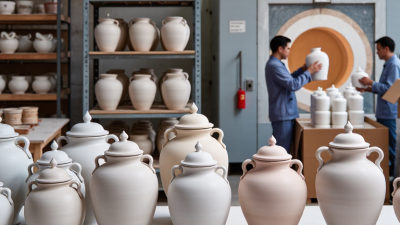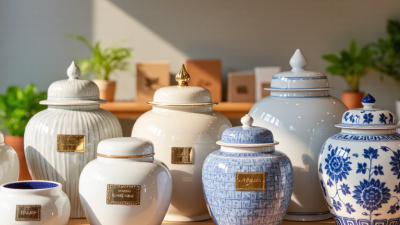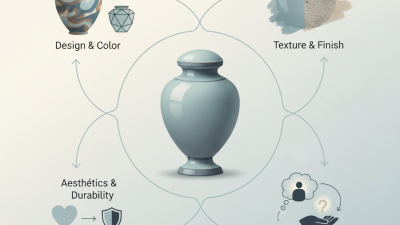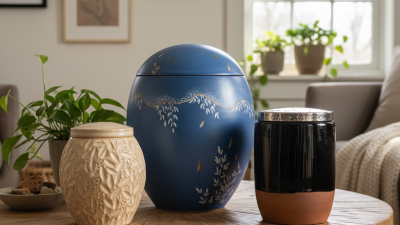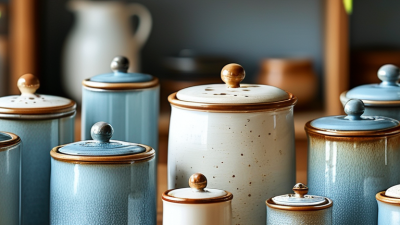


China has become a significant sourcing base for Ceramic Urn products. Its factories offer varied clay bodies, glazing methods, shapes, and decoration options. Global buyers can find practical designs for ashes, memorial spaces, and ceremony settings.
A reliable manufacturer should explain every production stage clearly. Ask about ceramic composition, firing temperature, glaze safety, dimensions, weight, and closure design. Request current factory photographs and a physical sample. Digital images can hide uneven rims, pinholes, or weak lids. No supplier is perfect.
Dr. Alan Wolfelt, a respected funeral-care educator, reminds families, “Funerals are for the living.” This insight also matters when selecting a Ceramic Urn. The product should feel dignified, stable, and easy to handle. It should also protect its contents during storage and transportation. Experienced Chinese manufacturers usually provide export packaging, carton testing, private labeling, and customization support. Still, buyers should verify these claims independently.
This guide examines China’s top Ceramic Urn manufacturers for global buyers. It considers craftsmanship, material consistency, production capacity, quality control, customization, packaging, and communication. It also considers less visible risks. A low quotation may exclude mold fees, inner containers, or replacement units. A beautiful sample may not represent mass production. That gap deserves attention.
Buyers should compare written specifications, inspection records, sample results, and delivery terms. They should also discuss cultural preferences before approving a design. Small details matter, including surface texture, color variation, engraved wording, and opening size. Careful sourcing takes time. It can prevent expensive misunderstandings later.
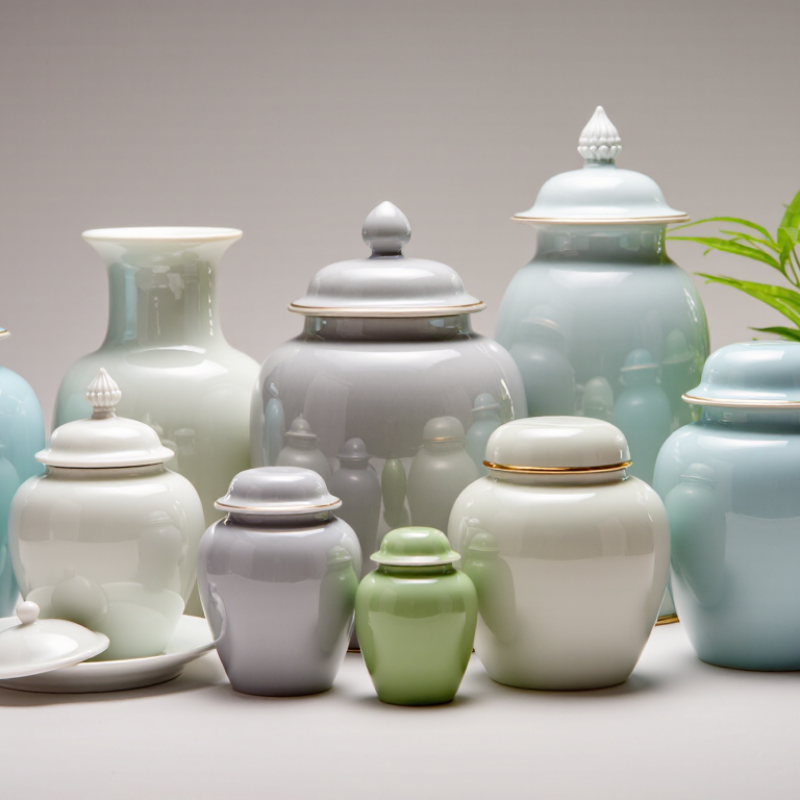
The U.S. cremation market is no longer a niche segment. The National Funeral Directors Association’s 2023 Cremation and Burial Report recorded a 60.6% cremation rate. This figure changes how global buyers assess ceramic urn suppliers. Demand now includes keepsake urns, companion sizes, and display pieces for different memorial spaces.
Chinese ceramic manufacturers can support this demand with scalable production and flexible decoration. Buyers should examine clay composition, firing temperature, glaze stability, and dimensional tolerance. A properly vitrified urn should resist moisture and surface cracking during normal indoor use. Production samples matter more than polished catalog photographs. Small color differences may appear between batches.
Practical sourcing also requires clear documentation. Ask for material specifications, inspection records, packaging tests, and breakage rates from recent shipments. The International Trade Centre’s trade data can help buyers compare ceramic export categories, although those categories do not isolate urns precisely. That limitation deserves attention. A low quoted price may hide thicker packaging needs, inconsistent lids, or higher replacement costs. I have found that a simple pre-shipment inspection often reveals details that factory samples miss. Reliable suppliers should accept measurable quality standards, not vague promises.

China Top Ceramic Urn Manufacturers for Global Buyers
A reliable ceramic urn begins with disciplined clay preparation and controlled kiln firing. Experienced Chinese workshops often fire urns between 1,200 and 1,300°C. This range supports stronger ceramic bodies and more stable glaze surfaces. Firing too quickly can create cracks, pinholes, or uneven color. The goal is consistency, not simply a higher temperature. Production teams should record kiln temperature, holding time, and cooling speed for every batch. Small details matter.
Water absorption below 0.5% is a practical quality indicator. Dense ceramic absorbs less moisture through its body and finished surface. This can help preserve the urn’s appearance during normal indoor or outdoor storage. Buyers should request laboratory results or batch-based testing, rather than relying on general claims. A single test may not represent every shipment. That point deserves attention.
Tips: Ask for firing records, water absorption reports, glaze samples, and clear inspection photos. Check the lid fit, base stability, wall thickness, and surface finish. Packaging also needs testing; a strong urn can still arrive damaged. Specify acceptable color variation before production begins. Perfection is difficult, so measurable standards are better than vague promises.
| Production Dimension | Typical Technical Specification | Why It Matters to Global Buyers | Recommended Verification |
|---|---|---|---|
| Firing temperature | 1,200–1,300°C, depending on the clay body, glaze system, and kiln cycle | Supports vitrification, dimensional stability, and a dense finished body | Review kiln records, firing curves, and production-batch documentation |
| Water absorption | Less than 0.5% by mass for a highly vitrified ceramic body | Indicates low porosity and helps reduce moisture penetration through the ceramic body | Request a laboratory test based on the boiling-water or vacuum procedure described in ASTM C373 |
| Ceramic body type | Vitrified stoneware or porcelain-type ceramic body | A dense body generally provides better resistance to moisture, staining, and everyday handling | Confirm the body formulation, technical data sheet, and fired-body test results |
| Dimensional tolerance | Tolerance should be agreed by drawing or approved reference sample; ceramic dimensions vary with shrinkage | Consistent dimensions improve lid fit, packaging efficiency, and retail presentation | Use an approved golden sample and record height, diameter, opening, and lid fit limits |
| Glaze and surface finish | Gloss, matte, satin, textured, or unglazed finish, selected for the intended design | Surface finish affects appearance, cleanability, scratch visibility, and color consistency | Approve a physical color standard and inspect pinholes, crawling, blistering, crazing, and shade variation |
| Mechanical integrity | No visible cracks, sharp ceramic edges, unstable bases, or loose structural parts | Reduces breakage risk during handling, storage, shipment, and placement | Perform visual inspection, base stability checks, lid-fit checks, and agreed drop or transport testing |
| Decoration durability | Decoration may be underglaze, in-glaze, overglaze, printed, or hand-applied | The decoration process affects abrasion resistance, color stability, and cleaning requirements | Specify rub resistance, chemical resistance, color limits, and inspection criteria before mass production |
| Internal closure design | Threaded, friction-fit, gasketed, or adhesive-assisted closure, depending on the model | A stable closure helps protect contents and improves long-term product usability | Check closure alignment, retention force, repeatability, and compatibility with the selected material |
| Packaging protection | Individual cushioning, separated components, moisture-resistant outer cartons, and clearly defined carton limits | Ceramic products are brittle and require protection against impact and vibration in international transport | Approve a packed sample and conduct agreed transport, vibration, or drop testing |
| Quality-control documentation | Inspection records covering appearance, dimensions, water absorption, packaging, and shipment quantity | Documented controls improve traceability and reduce variation between production batches | Request batch inspection reports, retained samples, corrective-action records, and pre-shipment inspection results |
China’s top ceramic urn manufacturers should be assessed through evidence, not polished catalogs. An ISO 9001 certificate shows a quality system, but it does not guarantee every shipment. Request the certificate number, issuing body, and current scope. Ask how the factory controls clay preparation, glazing, firing temperature, and final packing. During supplier reviews, I look for batch records and traceability labels. Small gaps matter.
MOQ can vary by shape, color, and decoration. A plain urn may require fewer units than a custom pattern. Confirm whether samples count toward the MOQ. Lead time should include molding, kiln scheduling, inspection, and export preparation. A quoted 25-day schedule may exclude busy-season delays. Ask for a production calendar in writing. It is often more useful than a promise.
Tips: Request three samples from one batch. Check lid fit, base stability, glaze consistency, wall thickness, and carton protection. Set measurable QC metrics, such as a zero-crack requirement, color tolerance, and a defined inspection level. Use pre-shipment photos, but do not rely on photos alone. An independent inspection can expose problems hidden by lighting. I would also leave some schedule flexibility; even disciplined factories can face kiln faults or material changes. That weakness deserves attention, not polite silence.
For global buyers, ceramic urn exports require more than attractive glazing and stable production. Customs classification deserves early review. HS 6913 generally covers ceramic ornamental articles, but the final code may depend on product design, function, and national customs interpretation. A broker should confirm the ruling before commercial shipment.
Packaging must survive real handling, not just factory inspection. ISTA 3A evaluates packaged products moving through parcel delivery systems, including vibration, shock, compression, and environmental risks. Its sequence is practical for smaller ceramic consignments. The 2024 Pitney Bowes Parcel Shipping Index reported 161.5 billion parcels across 13 major markets in 2023. That volume explains why an urn may face repeated conveyor impacts, drops, and warehouse stacking. Use a fitted inner cushion, a rigid outer carton, and visible lot identification. One test is never enough.
Incoterms 2020, published by the International Chamber of Commerce, clarifies transport costs, delivery points, and risk transfer. It does not decide product ownership, payment terms, or every insurance obligation. Specify the named place precisely, such as “FCA, Shanghai warehouse” or “DAP, buyer’s address.” Check whether the buyer or seller handles import clearance and duties. Small wording errors create expensive delays. A perfect carton is unrealistic, so experienced exporters document drop-test results, carton dimensions, gross weight, and moisture protection. We still recheck them.
HS 6913 classification context, ISTA 3A packaging validation, and Incoterms® 2020 cost and responsibility allocation
The chart shows whether the seller generally carries each listed obligation under selected Incoterms® 2020 rules. HS 6913 covers ceramic statuettes and other ornamental ceramic articles, but the final tariff classification depends on the product’s construction, function, and the importing country’s customs decision. ISTA 3A is a performance test procedure for packaged-products shipped through parcel delivery systems; it is not an automatic certification or pass rate.
China’s ceramic urn sector serves buyers through large, medium, and workshop-scale factories. UN Comtrade 2023 data for HS 6913 shows China remains a major exporter of ceramic ornamental products. Capacity claims still require evidence. Ask for monthly output, kiln size, firing schedules, and recent production records. A factory showing 50,000 units may not produce that volume consistently.
Private labeling should be checked at the sample stage. Confirm mold ownership, logo placement, glaze options, carton printing, and barcode control. Request a pilot order with the exact urn shape, lid fit, color, and packaging. Small details matter. ISO’s 2023 Survey recorded more than 1.2 million ISO 9001 certificates worldwide, but certification alone does not prove careful ceramic production. Review inspection reports, defect rates, corrective actions, and shipment photos.
Pricing needs more than a unit quotation. Compare clay quality, firing temperature, decoration, inner packaging, tooling, freight, and payment terms. A low factory price can become expensive after breakage and relabeling. Request a landed-cost sheet using the same delivery term for every supplier. Ceramic freight is especially sensitive to packing density. A factory may quote $4.80 per urn, while reinforced cartons add $0.65 and reduce container capacity. The difference is easy to miss. One imperfect assumption can distort the entire comparison. Supplier records should include export history, batch traceability, product testing, and references from comparable buyers. A polished showroom is useful, but it is not proof of repeatable performance.