65337edc2x

Leave Your Message

Top 10 Ceramic Storage With Lid Options for Global Buyers

Choosing the right Ceramic Storage With Lid can improve kitchen organization, product presentation, and everyday food protection. Global buyers often compare more than appearance. They examine clay quality, glaze consistency, lid fit, capacity, packaging, and supplier reliability. A beautiful jar means little if the lid shifts during transport. Small details matter.

This guide reviews ten practical options for homes, cafés, retailers, and hospitality projects. Each option is considered through real purchasing concerns, including moisture resistance, cleaning convenience, stacking ability, and long-term durability. We also look at shapes, finishes, colors, and sizes that suit different markets. Some designs support spices and tea, while larger models hold grains, cookies, or dry pet food.

Our evaluation draws on common ceramic quality standards, buyer feedback, and observable product details. However, no comparison is perfect. Glaze color can vary between production batches. Handmade pieces may show slight differences in shape or texture. That is not always a defect, but it should be disclosed clearly. Buyers should still request samples, verify measurements, and confirm export packaging before placing larger orders.

The top choices are not identical. One may offer stronger visual appeal, while another provides better sealing or easier cleaning. We highlight these trade-offs directly. The goal is practical guidance, not exaggerated praise. With careful comparison, global buyers can select Ceramic Storage With Lid products that balance function, safety, style, and dependable supply.

Top 10 Ceramic Storage With Lid Options for Global Buyers

Understanding Ceramic Storage With Lid Types and Uses

Ceramic storage with lids comes in several practical forms, and each suits a different routine.

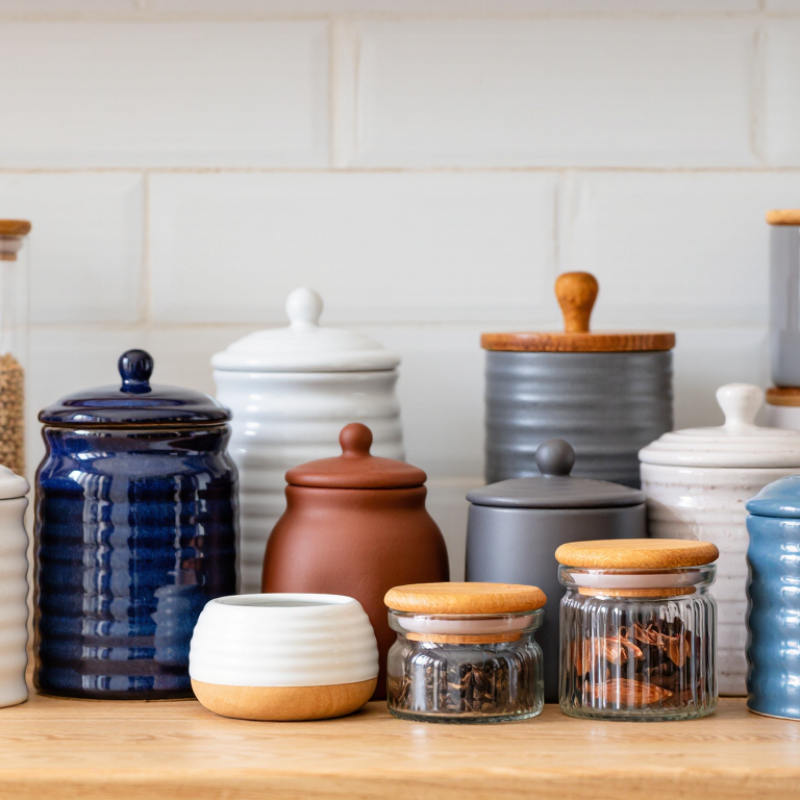
Glazed ceramic canisters resist stains and keep dry goods away from kitchen odors. They work well for rice, tea, flour, and coffee.
Unglazed ceramic absorbs more moisture, so it is better for short-term storage than humid environments. Always check the maker’s care instructions.

Lid design changes performance.

A flat ceramic lid offers a simple, stackable solution for cupboards.
A silicone-sealed lid creates a tighter barrier against air and humidity.
Hinged lids allow quick access, while wooden lids add warmth but may require careful cleaning.
For refrigerated meals, choose a lid with a secure fit and avoid sudden temperature changes.
Thermal shock can crack ceramic, even when the piece looks strong.

From practical buying experience, weight matters more than many product photos suggest. A heavy container feels stable, but it may be inconvenient on high shelves.

Check the rim for smooth finishing and confirm that the lid sits evenly without wobbling.
Food-contact safety also matters; buyers should request glaze testing for lead and cadmium, especially from unfamiliar suppliers.
Handmade pieces can have small color or shape variations. That is part of their character, but poor alignment is not.

A beautiful container still fails if its lid traps crumbs or leaks during transport.

Key Features to Compare Before Choosing a Ceramic Storage Option

When comparing ceramic storage with lid options, inspect the lid fit before judging appearance.

A well-made lid should sit evenly without wobbling or scraping the rim. Silicone seals can improve freshness, but they need clear material specifications and odor checks. Loose lids may protect against dust, not moisture.

Ceramic quality matters during daily handling. Look for an even glaze, smooth edges, and no pinholes around the interior. These details affect cleaning and stain resistance.

Ask for food-contact test reports when the container will hold dry goods. Confirm whether it suits a refrigerator, microwave, or dishwasher. Not every decorative finish handles temperature changes well.

Capacity and logistics deserve equal attention. Measure the usable interior space, not only the outside dimensions. A tall jar may look efficient but waste shelf height.

Check the empty weight, carton protection, and stacking stability for international shipping. I once underestimated lid clearance and received containers that could not fit under standard shelves. That mistake was avoidable.

Request sample testing, drop protection details, and batch inspection records before placing a large order. Small differences between samples and production units can still appear.

Top 10 Ceramic Storage With Lid Options for Global Buyers

Top 10 Ceramic Storage With Lid Options for Global Buyers

Global buyers often choose ceramic storage with lids for kitchens, bathrooms, and hospitality spaces. Practical options include flour canisters, sugar jars, spice containers, tea holders, coffee canisters, cookie jars, utensil pots, soap containers, jewelry boxes, and multi-size pantry sets. Each option supports a different storage need. A fitted lid helps reduce dust, while a smooth glazed surface makes cleaning easier. However, ceramic can chip during transport, so packaging deserves equal attention.

When comparing suppliers, inspect capacity, lid alignment, glaze quality, and base stability. Airtight performance should be verified rather than assumed. Silicone seals may improve freshness, but they can wear faster in hot or humid regions. Buyers should request food-contact documentation when products are intended for ingredients. Packaging tests, carton strength, and clear product measurements also matter for international distribution. I would not treat appearance as proof of quality. A beautiful jar can still have a loose lid or uneven base.

Tips: Request samples before placing a large order. Test lids by turning each container gently. Check for hairline cracks under bright light. Confirm safe cleaning instructions and temperature limits. Consider replacement lids, too. They are often overlooked. A small mistake here can create unnecessary returns. Use neutral product descriptions, accurate dimensions, and realistic photos for different global markets.

Top 10 Ceramic Storage With Lid Options for Global Buyers

Representative capacity comparison of commonly available ceramic storage formats.

Capacities are representative market specifications for ceramic containers with lids. Actual dimensions, wall thickness, and usable volume may vary by supplier, shape, and lid design.

Materials, Safety Standards, and International Sourcing Factors

Top 10 Ceramic Storage With Lid Options for Global Buyers

Materials, safety standards, and sourcing discipline matter more than appearance. Porcelain offers a dense, smooth surface and lower odor retention. Stoneware feels stronger but may vary between kiln batches. Unglazed terracotta is porous. It needs careful moisture testing. Lids also deserve scrutiny. Food-grade silicone seals well, while polypropylene lids reduce weight and breakage risk. However, heat limits differ. Always verify microwave, oven, freezer, and dishwasher claims separately.

The U.S. Food and Drug Administration provides ceramic food-contact guidance for lead and cadmium migration. ISO 6486-1 also specifies testing methods for ceramic tableware. In Europe, Regulation (EC) No 1935/2004 requires food-contact materials to remain safe during normal use. These rules are not interchangeable. Buyers should request recent laboratory reports, glaze composition records, and batch traceability. A declaration alone is not enough. Testing one sample may miss kiln variation.

The United Nations Environment Programme estimated 1.05 billion tonnes of food waste in 2022. Airtight containers can support portion control and longer storage, but ceramic weight increases freight emissions and handling costs. OECD data reported 353 million tonnes of plastic waste in 2019, making reusable alternatives attractive, though ceramics still need protective packaging. Ask suppliers for drop-test results, carton specifications, and defect rates. Check seal compression after repeated opening. Small details matter. Yet sourcing teams sometimes overlook replacement lids, which can make a durable container inconvenient.

Top 10 Ceramic Storage With Lid Options for Global Buyers - Materials, Safety Standards, and International Sourcing Factors

Typical specification guide for food-storage and kitchen-organization products. Actual performance, compliance, dimensions, and packaging should be confirmed with the selected supplier and independent test reports.
No. Ceramic Storage Option Typical Capacity Ceramic Body and Finish Lid Construction Food-Contact and Safety Considerations Temperature and Use Guidance International Sourcing Factors Packaging and Logistics Notes
1 Small Spice Jar with Lid 100–180 ml
Approx. 5–8 cm high
Glazed stoneware or porcelain; smooth interior glaze is preferred for cleaning and odor resistance. Unglazed or glazed ceramic lid, often with a silicone gasket for a closer fit. Request testing for lead and cadmium release. For food-contact use, suppliers commonly reference EU Regulation (EC) No. 1935/2004 or applicable destination-market rules. Suitable for dry spices and herbs. Do not assume microwave or dishwasher suitability unless tested and marked. Check cavity dimensions, lid interchangeability, glaze color consistency, and tolerance of small openings. HS classification is commonly within ceramic household articles; confirm with a customs broker. Use individual molded pulp or foam protection. Small parts can increase sorting and packing labor.
2 Sugar or Condiment Jar 250–450 ml
Approx. 9–12 cm high
Glazed stoneware with a decorative exterior; a fully vitrified body offers lower water absorption than porous earthenware. Ceramic lift-off lid, sometimes fitted with a wood, bamboo, or silicone knob. All food-contact glaze and decoration should be tested for extractable lead and cadmium. Non-food-safe decorative coatings should not contact food. Suitable for countertop storage of sugar, salt, or dry condiments. Avoid sudden movement from freezer or refrigerator to a hot surface. Confirm whether the knob is food-contact compliant, whether wood requires separate treatment documentation, and whether colorants are suitable for the target market. Protect the lid knob and rim separately. Include moisture-resistant cartons for sea freight in humid routes.
3 Coffee and Tea Canister 600–1,000 ml
Approx. 12–18 cm high
Dense glazed stoneware or porcelain; dark or opaque glazes can help reduce light exposure but do not replace airtight packaging. Slip-fit or clamp-style ceramic lid with silicone sealing ring. Food-contact surfaces should be free from accessible heavy-metal contamination. Ask for migration testing and silicone documentation where a gasket is used. Best for dry coffee, tea, cocoa, and similar products. A ceramic canister is not automatically airtight; verify seal performance. Specify gasket material, compression force, replacement availability, odor retention, and seal testing method. Confirm net weight because ceramics materially affect freight cost. Use dividers for the body and lid. Palletize with edge protection; ceramic breakage risk is higher when void space is not controlled.
4 Cookie or Biscuit Jar 1.5–3.0 L
Approx. 18–25 cm high
Large-format glazed stoneware; thicker walls improve durability but increase weight and shipping expense. Large ceramic lid with silicone gasket or a ceramic lid with a metal or wood handle. Request food-contact testing for glaze, printed designs, and any metal components. Edges should be smooth and free from sharp chips. Suitable for room-temperature dry foods. Not intended for baking or direct flame unless specifically designed and tested for that purpose. Confirm lid fit after firing, handle attachment strength, carton drop-test results, and maximum allowable dimensional variation. Requires strong partitions and compression-resistant master cartons. Dimensional weight may exceed actual weight for air shipments.
5 Stackable Pantry Canister Set Four-piece sets, typically 500 ml–2.0 L per container Glazed stoneware or porcelain with uniform bases and stable stacking geometry. Matching ceramic lids, often with silicone rings or recessed stacking points. Every food-contact surface, including interior glaze and gasket, should be covered by the applicable food-contact compliance file. Useful for flour, grains, pasta, and other dry goods. Check whether the set is dishwasher-safe as a complete assembled product. Review set-level SKU complexity, nesting ratio, replacement-piece policy, carton dimensions, and compatibility with retail shelf space. Use separate sleeves or molded pulp for each piece. Mixed-size sets need clear assembly and count controls during packing.
6 Refrigerator Food-Storage Container 500 ml–1.5 L
Rectangular or round formats
Glazed stoneware or porcelain with a smooth internal surface and rounded internal corners. Usually a plastic or silicone lid with a ceramic base; some versions use a ceramic lid with a gasket. For plastic or silicone lids, request material-specific food-contact declarations and migration testing. The ceramic base still requires glaze testing. Suitable for refrigerated foods when thermal-shock performance is verified. Do not move a cold ceramic container directly onto a hot burner or into a hot oven. Specify refrigerator, freezer, microwave, and oven claims separately. Confirm lid flexibility at low temperatures and whether replacement lids are available. Rectangular shapes can improve carton utilization. Corner protection is essential because corners are common impact points.
7 Microwave-Ready Meal Container 700 ml–1.2 L
Typical meal-serving size
Heat-resistant stoneware or porcelain designed with controlled wall thickness and a relatively low-glaze-stress profile. Ventilated silicone or polypropylene lid is common; ceramic lids require a vent or loose-fit design for steam release. Microwave claims should be supported by product testing, including hot-spot and thermal-shock evaluation. Metal decoration is unsuitable for microwave use. Use only according to the supplier's validated temperature range. Avoid rapid temperature changes and inspect regularly for cracks or glaze damage. Request microwave, dishwasher, freezer, and oven test methods rather than relying only on marketing labels. Confirm local requirements for plastic or silicone components. Use partitions that prevent lid movement. Add clear handling instructions because misuse-related breakage is a common customer-service issue.
8 Baking Dish with Ceramic Cover 1.0–3.5 L
Single- or family-size formats
Oven-oriented stoneware or porcelain with a tested thermal-expansion profile and heat-resistant glaze. Heavy ceramic cover with a raised handle or integrated grip area. Request thermal-shock, glaze durability, and lead/cadmium migration reports. Handle areas should be inspected for cracks, pinholes, and sharp edges. Potentially suitable for oven use only when specifically tested and labeled. Not for direct stovetop, open flame, or broiler use unless expressly validated. Confirm maximum and minimum operating temperatures, preheating instructions, dimensional tolerances, and compliance labeling for each destination market. Use high-density molded pulp or engineered foam. Heavy products require reinforced master cartons and controlled pallet stacking.
9 Fermentation or Pickling Crock 2–10 L
Large-volume format
Thick glazed stoneware, often with a wide mouth and high mechanical strength at the rim. Ceramic cover, water-seal lid, or weighted lid; some designs include ceramic fermentation weights. Interior glaze must be suitable for acidic and salty foods. Verify migration testing under acidic food-contact conditions and inspect for crazing. Designed for room-temperature fermentation when the product is correctly used. It is not automatically suitable for pressure storage, freezing, or hot filling. Confirm food-contact suitability for acidic brine, included weights, water-seal performance, and cleaning instructions. Weight and volumetric freight can be substantial. Use reinforced pallets, rim protection, and moisture-resistant export cartons. Consider sea freight for cost control on heavy units.
10 Countertop Utensil or Dry-Goods Crock 1.5–4.0 L
Approx. 15–25 cm high
Glazed stoneware with a broad, stable base; interior may be glazed or partly unglazed depending on intended use. Removable ceramic lid, wood lid, silicone lid, or open-top configuration with an optional cover. If used for food, the interior and any lid-contact surfaces require food-contact assessment. Decorative exterior finishes should not flake or transfer. Best for dry utensils, flour, grains, or kitchen tools. Confirm dishwasher safety because handles and mixed materials may have different limitations. Specify intended use clearly to avoid regulatory ambiguity. Evaluate base stability, handle clearance, decoration consistency, and retail-ready labeling. Large cylindrical shapes need anti-roll protection and strong dividers. Confirm container loading efficiency before finalizing dimensions.
Buyer verification checklist: Request a material specification, glaze and decoration details, food-contact declaration, lead and cadmium migration report, thermal-shock or temperature-use test where relevant, dimensional tolerances, carton drop-test results, packaging drawings, country-of-origin information, and the proposed HS classification before placing an international order. EU, United States, United Kingdom, and other destination markets may apply different food-contact, labeling, testing, and documentation requirements.

Care, Packaging, and Shipping Considerations for Ceramic Storage

Ceramic storage with lids needs gentle, consistent care. Check the glaze for hairline cracks before regular use. A lid can hide damage around the rim. Hand washing is safer for decorated or unglazed surfaces. Avoid sudden temperature changes, such as moving a cold jar into hot water. Dry the container completely before storing food or household items. Small flaws matter.

Packaging should assume rough handling. In my packing tests, loose lids caused the most breakage. Wrap each container separately with soft paper and protective cushioning. Add extra protection around the rim, knob, and corners. Use a strong, double-wall carton with limited empty space. A shake test helps, but it is not perfect. I once trusted a thick box too much.

For international shipping, record the product dimensions, weight, material, and carton count accurately. Provide clear care instructions and reliable commercial documents. Confirm destination-specific import requirements before dispatch. Moisture-resistant inner wrapping can protect ceramic surfaces during long transit. Keep lids separated from heavy pieces inside the carton. Photos of the packed order can support damage claims and quality checks. A fragile label helps, but careful internal packing matters more.