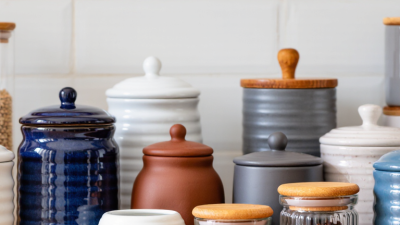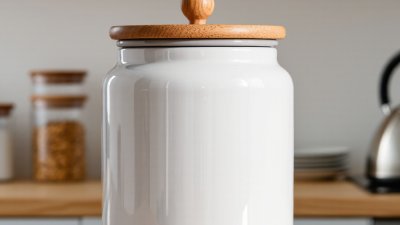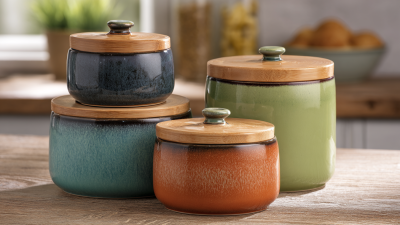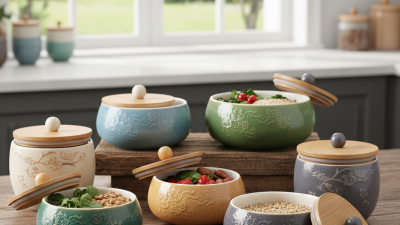


Choosing a Ceramic Food Storage Jar manufacturer in China involves more than comparing prices or polished catalog photos. Buyers need to examine clay composition, glaze consistency, lid fit, and the finish around each jar’s rim. These details shape daily use. A lid that rocks on a countertop or a rough inner edge can matter more than a decorative pattern.
Design thinker and crafts authority William Morris offered a useful principle: “Have nothing in your houses that you do not know to be useful, or believe to be beautiful.” His words are not specific to food jars, but they frame a practical buying question: can a product combine dependable function with considered design? A useful starting point.
This guide to China’s top 10 Ceramic Food Storage Jar manufacturers considers product range, customization, production experience, and quality-control practices. It also highlights what buyers should verify directly, including sample consistency, packaging details, and how manufacturers handle defects. Photos cannot answer everything. Even a well-made jar may not suit every kitchen, retailer, or shipment plan. No supplier is perfect, and claims deserve careful checking. Use the list as a shortlist, then compare samples and confirm specifications before making a decision.
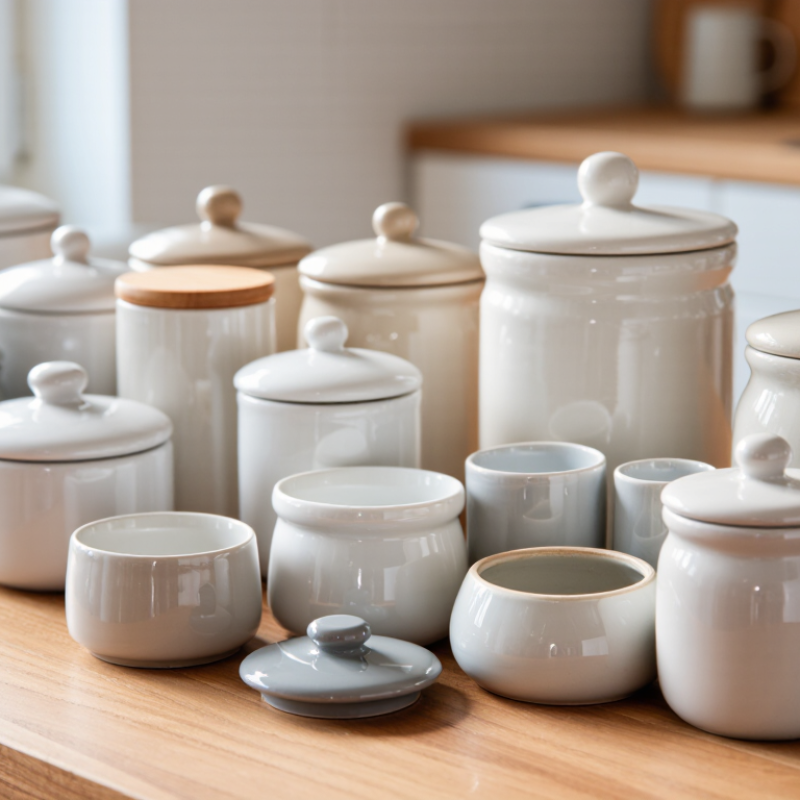
A ceramic food storage jar is a fired clay container designed to hold dry goods or prepared foods. Its body is commonly made from clay blended with minerals such as feldspar and silica. The mixture is shaped by wheel throwing, pressing, or casting, then dried to reduce cracking. Makers apply glaze for a smoother, less absorbent surface; some forms are glazed before their main firing. Small details matter.
The European Commission Joint Research Centre’s Ceramic Manufacturing Industry BREF places firing for household and ornamental ceramics broadly around 1,000–1,300°C, depending on the product and process. At these temperatures, the clay body hardens and the glaze develops its finish. After cooling, makers inspect the rim, base, and glaze for chips, pinholes, or uneven coverage. A lid should sit steadily, though a perfectly airtight fit is not automatic. That point is easy to overlook. Practical quality checks may include measuring dimensions, checking glaze consistency, and assessing food-contact suitability for the intended use. Since recipes and kiln conditions vary, a jar’s appearance alone cannot confirm its performance.
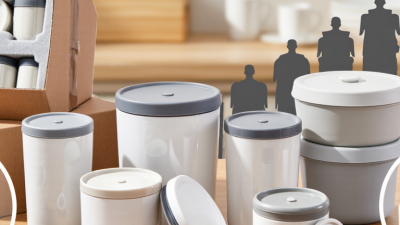
China’s ceramic jar cluster benefits from a connected supply chain. Clay preparation, forming, glazing, kiln firing, and packing services often operate within established manufacturing regions. This proximity can shorten sample cycles and make custom sizes or lid shapes easier to develop. Scale matters. Grand View Research valued the global ceramic tableware market at about US$10.2 billion in 2023, reflecting sustained demand for household ceramic products.
Production capability is only part of the story. UN Comtrade’s 2023 trade tables for HS 6912 identify China among the leading exporters of non-porcelain ceramic household goods. That export experience supports established inspection routines and access to international freight networks. Buyers can specify practical checks, including jar capacity, lid fit, glaze consistency, and water absorption. A lid that looks snug may still loosen after repeated washing.
The advantages are not uniform. Factories differ in kiln control, testing discipline, and the consistency of handmade finishes. Still, China’s supplier density gives buyers options for balancing cost, finish, and order volume. I would avoid treating low unit price as proof of value; reject rates and replacement shipping can change the calculation. Small details count. A hairline glaze flaw can turn a food-storage jar into a poor shelf product.
When evaluating China-based ceramic food storage jar manufacturers, request evidence beyond a polished sample. Check the clay body, glaze specification, firing records, dimensional tolerances, and lid fit. Ask for independent lead and cadmium migration tests on the finished jar, including its food-contact surfaces. Confirm the report names the exact glaze, factory, test method, and sample date. Details matter. The WHO’s 2015 global burden assessment estimated 600 million foodborne illnesses and 420,000 deaths each year. Those figures are not ceramic-specific, but they reinforce the need for documented food-contact controls.
Assess production consistency, not just quoted capacity. Request inspection records from several recent batches and compare jar weight, glaze coverage, rim finish, and closure fit. The European Commission’s Ceramic Manufacturing Industry BREF identifies kiln firing as a major energy-consuming stage; ask manufacturers how they monitor kiln conditions, defects, and energy use per batch. Also review reject rates, corrective-action records, and how changes to materials are approved. A factory may present excellent samples while routine output varies. That gap is easy to miss. Check whether the supplier can trace a finished lot back to its material and firing records, then verify the records during an audit.
China’s ceramic food storage jar sector includes producers with very different strengths. These ten manufacturer profiles are best compared by process, materials, and quality controls, rather than by catalog photos alone. Some focus on small-batch, hand-finished stoneware; others use molds for consistent dimensions and larger orders. Several offer custom jar shapes, while others concentrate on lids, glazing, or export packaging. Details matter. A glossy finish can look attractive, yet uneven rims or poorly fitting lids may affect everyday use.
For a useful comparison, ask how each manufacturer checks glaze consistency, wall thickness, and lid fit. Request sample pieces and inspect the rim, base, and interior under natural light. One profile may suit a café seeking sturdy countertop jars; another may fit a retailer needing repeatable colors and sizes. Ask about production capacity and lead times, too. These can change with order size and seasonal demand. Do not assume that a polished sample guarantees identical bulk production.
Tips: Confirm the intended food-storage use, available test documentation, minimum order quantity, and packaging method. Note any differences between samples and written specifications before placing an order.
China Top 10 Ceramic Food Storage Jar Manufacturers
How to Source, Inspect, and Import Ceramic Food Storage Jars
When comparing Chinese suppliers, ask for factory details, production capacity, export references, and food-contact test reports. Match the report to the exact jar, glaze, and color you intend to order. ISO 6486-1 and ISO 6486-2 specify test methods and limits for lead and cadmium release from ceramic ware. Request independent testing where appropriate. A tidy sample is not proof that every production batch will match. Check several jars for glaze pinholes, rim chips, capacity, wall thickness, and lid fit. Test the seal with dry goods and, if relevant, a simple leak check.
Agree on approved samples, defect limits, packaging, and inspection timing in writing before production. Ask an inspector to check finished goods before the balance is paid; include carton strength and drop testing, since ceramic breakage often starts in transit. UNCTAD’s Review of Maritime Transport 2024 reported maritime trade growth of 2.4% in 2023, while containerized trade grew only 0.3%. Build schedule slack into bookings. Confirm the HS classification, import duties, labeling, and required food-contact documents with your customs broker for the destination market. Keep photos, test reports, and inspection records. Small details matter. A rushed inspection can miss variation between cartons.
A practical, company-neutral checklist for evaluating ceramic food storage jar suppliers and managing sourcing, inspection, and import requirements.
| No. | Evaluation Dimension | Useful Sourcing Information | What to Verify Before Ordering |
|---|---|---|---|
| 1 | Factory and production capability | Confirm whether the supplier manufactures the jars, outsources production, or performs only trading and export services. Ceramic forming, glazing, firing, decoration, and final packing may be handled at different facilities. | Request the production-site address, a live or in-person factory audit, a process flow, and confirmation of which steps are subcontracted. |
| 2 | Ceramic body and glaze | Food storage jars may be made from different ceramic bodies, including stoneware or porcelain. Body composition, glaze, firing process, and intended use affect appearance and performance. | Specify the body type, glaze finish, color, and intended use in the product specification. Approve a production-representative sample rather than relying only on a digital image. |
| 3 | Food-contact compliance | Requirements depend on the destination market and product construction. Ceramic articles intended for food contact may be subject to lead and cadmium migration rules or other applicable food-contact requirements. | Identify the destination country and applicable rules with the importer or compliance adviser. Request relevant test reports for the finished product and check that the model, glaze, and decoration match the tested sample. |
| 4 | Capacity and dimensions | Jar capacity, height, diameter, opening size, and usable internal volume should be clearly defined. Brimful capacity and practical fill capacity are not the same measurement. | Approve a dimensioned drawing that states measurement points, units, tolerances, and the capacity measurement method. Check a sample against the approved drawing. |
| 5 | Lid and sealing components | Lids can be ceramic, wood, metal, or another material. A gasket or other sealing component may be supplied separately and can have its own food-contact requirements. | Confirm lid material, fit, gasket material, component supplier, and intended sealing performance. Test the complete jar-and-lid set; do not assume a ceramic lid makes the container airtight. |
| 6 | Decoration and surface quality | Printed, painted, or applied decoration can affect both appearance and compliance. Common visual checks include glaze coverage, color consistency, pinholes, cracks, chips, and sharp edges. | Approve a signed reference sample and define acceptable cosmetic defects. Where decoration is used, confirm that relevant food-contact testing covers the decorated finished article. |
| 7 | Inspection plan | Inspection can cover dimensions, workmanship, quantity, labeling, and packaging. AQL sampling plans are commonly agreed between buyer and supplier; the inspection level and acceptance criteria should be specified in advance. | Write the sampling method, defect classifications, acceptance limits, and inspection timing into the purchase terms. Arrange a pre-shipment inspection when the goods are complete and packed or ready for packing. |
| 8 | Packaging and breakage control | Ceramic is fragile, so packaging design should protect individual jars and prevent movement in master cartons. Carton strength and palletization affect damage risk during handling and transit. | Review the packing specification, protective inserts, carton markings, and pallet plan. Test the actual packed configuration using a transport-appropriate procedure agreed by the buyer and supplier. |
| 9 | Shipping terms and customs classification | Incoterms define the division of delivery costs, risks, and responsibilities. Ceramic tableware and kitchenware classification can depend on the product's material and characteristics; the correct tariff code must be confirmed for the specific goods and destination. | State the agreed Incoterms rule and named place in the contract. Have the importer or customs broker verify the applicable HS or tariff classification, duties, and import documentation before shipment. |
| 10 | MOQ, sampling, and production schedule | Minimum order quantity, sample charges, tooling costs, and lead time vary by design, decoration, order size, and production schedule; there is no universal figure for all suppliers. | Obtain written quotations for samples and production, confirm what costs are refundable or included, and get a dated schedule covering sample approval, production, inspection, and dispatch. |
Note: This table is a sourcing and due-diligence guide, not a verified ranking of named manufacturers. Specifications, compliance obligations, commercial terms, and customs treatment should be confirmed for the exact product and destination market.