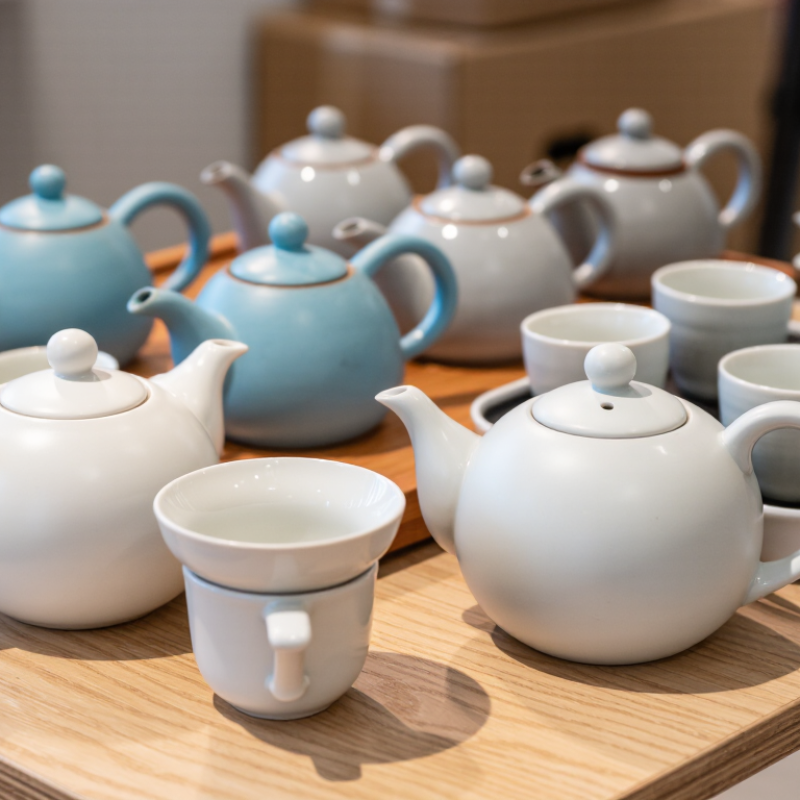
Choosing the right Ceramic Tea Pot Set for wholesale requires more than comparing prices and attractive photographs. Retail buyers need products that perform reliably, look consistent, and suit the expectations of their customers. A smooth-glazed pot may appear impressive online, yet its lid can wobble after repeated use. Small details matter.
Wholesale evaluation should begin with material quality, capacity, design, packaging, and supplier communication. Look closely at the clay body, glaze coverage, handle strength, and pouring control. Check whether each set includes matching cups, strainers, or serving accessories. Ask for samples before placing a large order. A sample can reveal uneven color, rough edges, weak packaging, or a lid that does not fit correctly.
Supplier experience also deserves careful attention. Reliable manufacturers should explain production methods, quality inspections, customization options, and realistic lead times. They should provide clear product specifications and respond consistently when problems arise. Test the set with hot water, inspect it after washing, and record your findings. Basic checks are useful.
Cost remains important, but the lowest quotation may create hidden expenses. Breakage, inconsistent batches, delayed delivery, and poor customer reviews can quickly reduce profit. No buying guide can remove every uncertainty. Even experienced buyers occasionally overlook a minor defect. That is why practical testing, documented communication, and a measured order size are essential. The best choice balances appearance, durability, safety, and dependable supply. A beautiful set is not enough.
Before selecting a ceramic tea pot set, define the wholesale market clearly. A café may need durable pots for repeated service, while a gift shop may prioritize appearance and packaging. Identify customer habits, expected price points, serving sizes, and seasonal demand. A 500 ml pot suits individual buyers, but restaurants often require larger capacities. Small details matter.
Translate these findings into measurable product requirements. Specify clay quality, glaze finish, lid fit, handle strength, and pouring control. Ask for food-contact safety test reports, including checks for lead and cadmium where required by the destination market. Request samples before placing a large order. Pour hot water several times. Inspect dripping, surface cracks, uneven coloring, and loose strainers. This hands-on test reveals problems that photos hide.
Packaging deserves equal attention. A beautiful set can still fail if two pots break during transit. Check inner cushioning, carton strength, barcode space, and replacement procedures. Confirm minimum order quantities, production times, color consistency, and inspection standards in writing. A common mistake is choosing the lowest unit price. Freight, breakage, storage, and returns may erase that saving. I would also question oversized sets. They look impressive, but many households have limited cabinet space. The requirement may need revision after real customer feedback.
How to Choose the Best Ceramic Tea Pot Set for Wholesale
Material affects durability, weight, and perceived value. Porcelain is fine, light, and suitable for premium collections. Stoneware feels heavier and usually handles daily service better. Earthenware offers warm colors, but its higher porosity needs careful testing. Grand View Research’s 2024 Ceramic Tableware Market report estimates the sector will grow at about 6.8% annually through 2030. That growth supports demand, but not every ceramic body suits wholesale use. Check water absorption, wall thickness, and thermal-shock performance. A beautiful sample can still fail after repeated heating.
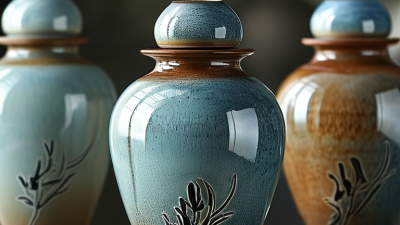
Glaze choice changes both appearance and maintenance. Glossy surfaces highlight bright colors, while matte glazes create a softer, handmade impression. However, matte finishes may show tea stains more easily. Request migration testing for lead and cadmium under the destination market’s requirements, such as ISO 6486 test methods. Shape also matters. A round pot pours smoothly, while a wide body cools tea faster. Test the lid fit, handle balance, spout control, and filter opening with real leaves. Small details matter. Stackability, carton protection, and replacement-part availability can strongly influence wholesale costs.
Tips: Compare three finished samples, not only material descriptions. Brew the same tea in each pot, then inspect dripping, staining, and heat retention. Ask suppliers for batch consistency records and independent test reports. I would avoid choosing only by color; that mistake looks expensive after customer returns. Also review actual packing dimensions before ordering. A compact design may sell well, yet a fragile lid can weaken the entire set’s value.
Wholesale buyers should evaluate every component, not only the teapot. A workable set may include a pot, lid, stainless-steel infuser, four cups, and a serving tray. Check whether the infuser reaches below the water line. Confirm that the lid stays secure during pouring. For restaurants, 800 to 1,200 milliliters often suits shared service, while 350 to 500 milliliters fits individual use. Cup volume should match the pot; otherwise, the set looks generous but serves awkwardly. Small details matter.
The International Tea Committee’s 2024 Annual Bulletin reports global tea production above 6.7 million tonnes in 2023. The market is broad, but wholesale demand remains segmented by occasion and region. Offer restrained colors for hospitality buyers, then add textured, hand-finished, or embossed options for gift channels. Matte glazes hide fingerprints, while glossy glazes reveal pinholes and uneven edges more easily. Ask for production samples, not only digital renders. Grand View Research’s 2024 tea market report projects continued growth through 2030. That supports varied formats, rather than one universal set.
Customization should cover logo placement, carton dimensions, cup count, glaze color, and handle shape. Request a pre-production sample and batch photos. Test pouring, stacking, dishwasher resistance, and glaze consistency across at least three units. Also request food-contact migration reports for lead and cadmium. A low quotation can conceal weak packing or high breakage. It happens. Treat customization as more than decoration; it changes tooling, inspection time, minimum order quantity, and landed cost. Leave room for revision.
Choosing the Best Ceramic Tea Pot Set for Wholesale
Supplier quality should be checked through samples, not attractive catalog photos. Examine the glaze under strong light for pinholes, bubbles, and uneven color. Pour hot water into each pot, then inspect the handle, lid fit, and spout flow. A loose lid can create costly customer complaints. Ask for production samples from the same clay body and firing process.
Certifications deserve careful verification. Request current food-contact test reports, factory audit records, and material declarations. Check the laboratory name, test date, sample description, and applicable market requirements. Documents without traceable details are weak evidence. Packaging also matters. A small drop test can reveal whether cardboard protection is sufficient. Some suppliers provide impressive paperwork but poor batch control. I learned this after receiving cartons with different glaze shades.
Pricing should include more than the unit quotation. Calculate decoration, inner packaging, tooling, inspection, freight, duties, and possible breakage. Compare the landed cost at different order quantities. A low price may hide a high minimum order or expensive replacement terms. Review deposit percentages, production lead times, cancellation conditions, and defect policies. Confirm whether shortages are replaced, refunded, or credited against future orders. Ask for a written tolerance for color variation and dimensions. Even careful buyers can overlook this detail. Keep every approved sample and specification in the purchase file. It protects both sides when production changes unexpectedly.
| Assessment Dimension | Recommended Wholesale Benchmark | Evidence to Request | Acceptable Range for Initial Orders | Common Risk Signal | Priority |
|---|---|---|---|---|---|
| Ceramic Material | Food-contact stoneware or porcelain with a clearly stated clay body and firing temperature. | Technical specification sheet stating material composition, firing temperature, glaze type, and product dimensions. | Stoneware: approximately 1,180–1,280°C; porcelain: approximately 1,200–1,400°C, depending on the formulation. | Material described only as “ceramic” without a technical specification or consistent product documentation. | High |
| Glaze and Surface Quality | Even glaze, stable color, smooth rim, no sharp edges, pinholes, crawling, blistering, or visible cracks. | Pre-shipment inspection photos, approved reference sample, defect classification standard, and tolerance sheet. | Minor cosmetic variation may be accepted; cracks, sharp edges, leaking, and unstable glaze should be zero-tolerance defects. | Supplier refuses to define acceptable defect levels or does not retain an approved sample. | High |
| Functional Testing | Teapot pours smoothly, lid fits securely, handle remains stable, and the set does not leak during normal use. | Water-leak test record, lid-fit inspection, handle-load check, and hot-water performance sample. | Every production batch should receive documented visual and functional inspection before packing. | Only appearance is inspected; pouring, lid fit, handle attachment, or leakage are not tested. | High |
| Food-Contact Compliance | Products meet the legal requirements of the destination market for ceramic food-contact articles. | Recent accredited laboratory report covering lead and cadmium migration, plus the applicable declaration of compliance. | Testing should be performed on the finished glazed product, not only on raw clay or glaze ingredients. | Supplier provides an undated report, a report for a different product, or an internal statement without laboratory evidence. | Critical |
| Relevant Certifications | Certifications and test reports should match the production site, product type, and destination market. | Certificate number, issuing body, validity period, factory address, scope, and test-model identification. | Depending on the market, documentation may include food-contact compliance, quality-management certification, social-audit records, and packaging compliance. | Certificate belongs to another facility, has expired, or does not cover ceramic food-contact products. | Critical |
| Price Basis | Compare prices using the same material, capacity, decoration, packaging, inspection, and delivery terms. | Itemized quotation showing unit price, tooling, decoration, packaging, testing, freight terms, and payment schedule. | For a basic ceramic teapot set in a wholesale production run, pricing commonly varies by capacity, decoration, packaging, order size, and destination; request at least three comparable quotations. | Unusually low price with no explanation for material, packaging, testing, or quality-control differences. | High |
| Sample Charges | Sample cost and shipping should be clearly separated from the production price. | Written sample quotation, sample lead time, modification charges, and refund or credit terms. | Sample charges may be refundable or creditable against a confirmed production order, but this must be stated in writing. | Supplier requests production payment before providing a representative sample or refuses to identify sample specifications. | Medium |
| Minimum Order Quantity | MOQ should match the buyer’s sales forecast, storage capacity, and cash-flow plan. | MOQ by color, pattern, size, packaging configuration, and decoration method. | Stock designs may have lower MOQs; customized glaze, logo, mold, or gift packaging normally requires higher quantities. | One MOQ is quoted without explaining whether it applies per style, color, carton, or total order. | High |
| Production Lead Time | Lead time includes artwork approval, sample approval, material preparation, production, inspection, and packing. | Production schedule with milestone dates and separate timing for new molds or custom decoration. | Standard ceramic production commonly requires several weeks; custom molds, decals, or special glazes require additional time. | Supplier offers a short delivery promise without considering firing, cooling, inspection, or peak-season capacity. | High |
| Quality-Control Process | Use documented incoming, in-process, final, and pre-shipment inspections. | Inspection checklist, defect photos, batch records, sampling method, corrective-action procedure, and inspection report template. | A written AQL-based or equivalent sampling plan is preferable for repeated wholesale orders. | Quality is described as “full inspection” without defining inspection stages, criteria, or reporting. | Critical |
| Packaging Protection | Each set should be protected against impact, abrasion, moisture, and movement during transport. | Packaging specification, carton dimensions, drop-test results where applicable, inner protection photos, and carton-marking details. | Use product separation, cushioning, strong export cartons, and packing validation for fragile ceramic items. | Products are packed with insufficient separation or the supplier cannot provide a confirmed carton pack-out. | High |
| Breakage and Defect Policy | Written replacement, refund, or credit terms should cover manufacturing defects and verified transport damage. | Defect-reporting deadline, photographic evidence requirements, replacement timing, credit procedure, and responsibility by delivery term. | Claims should be traceable to batch numbers, carton numbers, inspection records, and agreed defect definitions. | Supplier accepts claims only verbally or places all breakage responsibility on the buyer regardless of the agreed delivery terms. | Critical |
| Payment Terms | Payment milestones should reduce risk while remaining commercially practical. | Pro forma invoice, deposit percentage, balance trigger, accepted payment methods, and bank-account verification process. | Common arrangements include a deposit followed by balance payment after production completion and inspection approval, subject to negotiation. | Requests payment to an unrelated account, changes bank details unexpectedly, or requires full payment before production evidence. | Critical |
| Customization Capability | Supplier can manage approved artwork, color references, logo placement, mold specifications, and packaging files. | Artwork template, color-approval process, mold ownership terms, tooling quotation, and approved pre-production sample. | Customization normally increases sampling time, tooling cost, MOQ, and quality-control requirements. | Supplier promises exact color or shape matching without a signed approval sample or documented tolerances. | Medium |
| Traceability and Communication | Each shipment can be linked to a purchase order, production batch, inspection record, and carton mark. | Batch-number format, production updates, contact escalation path, and document-retention policy. | Written communication should confirm specifications, revisions, approvals, delays, and corrective actions. | Specifications change through informal messages and the supplier cannot identify the production batch after shipment. | High |
| Overall Selection Rule | Select the supplier that provides the strongest combination of verified compliance, repeatable quality, transparent pricing, and enforceable order policies. | Complete a document review, approve a physical sample, conduct a pre-shipment inspection, and place a controlled pilot order before scaling. | A supplier should not be selected on unit price alone; compliance and defect-control failures can exceed the initial price difference. | Avoid suppliers that cannot verify food-contact safety, factory identity, product specifications, or written claim procedures. | Critical |

Note: Pricing, MOQs, lead times, testing requirements, and order terms vary by product specification, production location, destination market, decoration method, and delivery terms. All figures and benchmarks should be confirmed through current quotations, valid laboratory reports, and a signed purchase agreement.
A wholesale ceramic tea pot set should pass more than a visual inspection. Request samples from the actual production line, not only showroom pieces. Check the lid fit, handle strength, pouring control, glaze coverage, and base stability. Pour hot water slowly, then inspect for leaks, sharp edges, stains, or unpleasant odors. A beautiful sample may still hide uneven walls or weak attachments. I have found that small defects become costly when multiplied across hundreds of sets.
Packaging and logistics deserve equal attention. Ask for a carton sample with dividers, corner protection, and moisture-resistant material. Perform a basic drop test on packed units, even if the supplier provides previous reports. It feels excessive. It is cheaper than replacing broken inventory. Confirm carton dimensions, gross weight, loading quantity, shipping marks, and estimated lead times. Clarify who checks damage before shipment and how claims are documented.
Tips: Compare at least two production batches. Measure ten teapots, not one. Record glaze color, capacity, and lid movement with photos. Ask whether raw materials, kilns, or subcontractors may change during production. Reliable suppliers explain these risks clearly and provide inspection records. They should also discuss monthly capacity, reorder timing, quality tolerances, and backup plans for delayed materials. Do not promise uninterrupted supply without evidence. A written production schedule is useful, but actual delivery history matters more.